
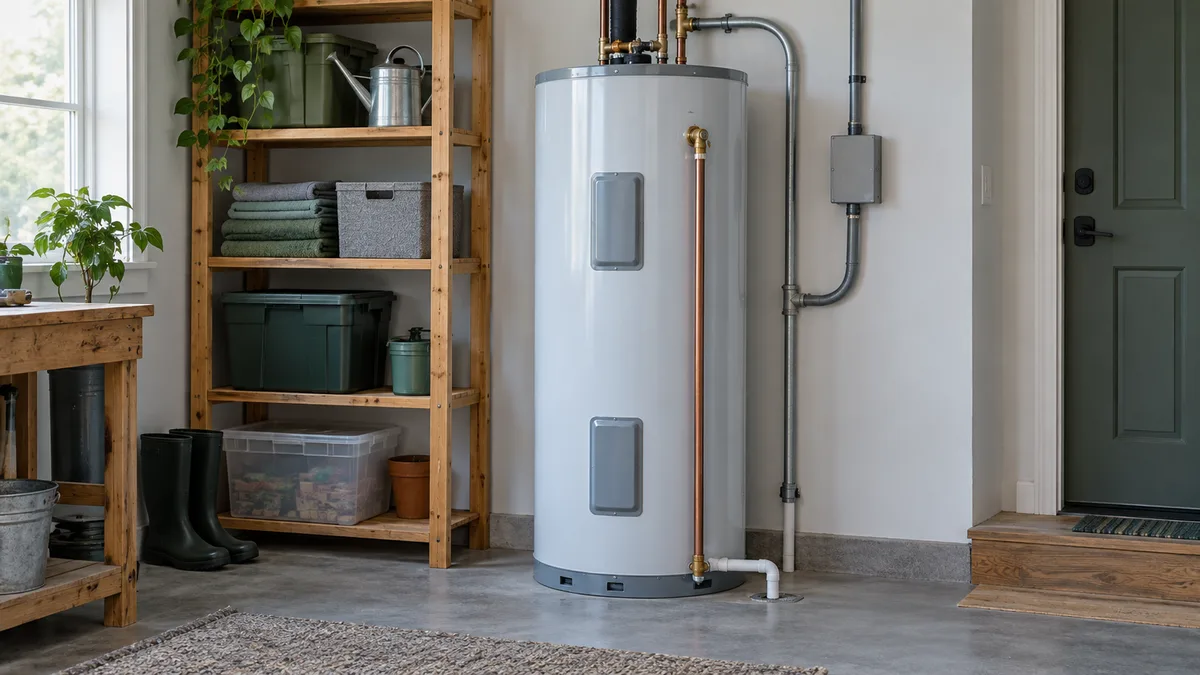
Understand the equipment in front of you
Which type is in your home?
A storage water heater holds heated water in an insulated tank. A tankless unit heats water as it flows through, subject to the unit’s capacity and conditions. A heat-pump water heater moves heat from surrounding air into water and has airflow and location requirements in addition to its plumbing needs.
Read the model information rather than identifying the unit by shape alone. Note the energy source and service contact in a private household record. The Department of Energy consumer water-heater overview distinguishes these equipment categories, but your manual provides the usable instructions for the installed model.
What are the visible connections for?
You may see cold-water supply and hot-water outlet piping, controls, an electrical connection or gas-related components. A storage unit commonly has a temperature-and-pressure relief device with a discharge arrangement. It is a safety component, not a convenient drain to operate experimentally.
Do not cap, plug, restrict or redirect a relief discharge pipe as a way to stop dripping. Discharge requires assessment of the cause. The visible arrangement must comply with the equipment instructions and applicable local requirements; an illustrative photograph is not an installation diagram.
Read symptoms without opening the appliance
What can a homeowner observe without servicing it?
Look from a safe accessible position for new water on the floor, exterior damage, obstructed access or a change in ordinary sound. Do not touch hot piping, reach into a compartment or remove a cover. Note whether the appliance displays an error and record it without repeatedly clearing it.
If you smell gas, leave the area without operating switches or creating ignition sources and contact the gas emergency service from outside. A carbon monoxide alarm also calls for leaving and getting emergency help. Do not stay beside the heater to locate the exact source or take photographs.
Why is there water near the heater?
Possible sources include a connection, condensate arrangement, relief discharge or the tank itself, depending on the equipment. A wet floor alone does not identify which one. Stay clear if water is near electrical equipment, and arrange prompt service rather than continuing normal operation without advice.
Write down where the water first appeared and whether it coincided with heating or another household event. Do not tighten connections while the equipment is hot or pressurized. A container catching water can conceal the rate of a continuing problem and should not become the permanent response.
What if the water is not hot enough?
Describe the pattern before changing a temperature control. Is the issue at one fixture, throughout the home or only after several consecutive uses? Does flow change as well? A mixing valve, fixture problem, demand pattern or heater fault may need different assessment.
Do not raise the thermostat blindly to compensate. Higher settings can increase scalding risk, and temperature management can also have hygiene considerations. Have a qualified professional advise on the appropriate settings and protective arrangements for the household and system. Our low water pressure guide helps distinguish temperature from flow symptoms.
Plan maintenance and time away
Does every heater need the same maintenance?
No. The manual, water conditions and equipment type determine the maintenance plan. A service visit may involve checks or work on components such as an anode, filters or scale buildup, but those tasks do not apply identically to every unit. Ask the technician to identify what your model requires and why.
A. O. Smith’s maintenance information explicitly supplements the printed appliance instructions. Do not copy a procedure for a different heater. In particular, draining, flushing and relief-valve work should not be improvised from a general article.
What should you ask at the next service visit?
- Which maintenance tasks are required for this model, and at what interval?
- Which tasks, if any, are intended for an ordinary homeowner?
- What symptoms should prompt stopping use or an urgent call?
- Is the current access, ventilation and discharge arrangement appropriate?
- Which records or settings should be kept for future service?
Ask for answers in language you can use later. “Annual check” is less useful than a clear description of the work and the next due date. Keep service paperwork with the model information so a future technician can see the history.
How should you prepare for being away?
Use the specific vacation or shutdown guidance for the equipment, with professional advice when uncertain. Do not disconnect power, close valves or drain a tank casually. Restarting incorrectly can damage equipment or create hazards. Extended vacancy may need a coordinated plumbing plan rather than one changed setting.
For freezing-weather travel, combine the heater instructions with a broader winter preparation plan. Make sure the person checking the home knows whom to call if heat is lost or water appears. A sensor notification is useful only if someone can respond appropriately.
Take this record to the service visit
A simple observation-and-service record
| Keep in your record | Why it helps |
|---|---|
| Model, energy source and manual | Prevents using the wrong procedure |
| Installation and service dates if known | Gives context for condition and maintenance |
| Exact symptom and when it occurs | Helps distinguish demand patterns from faults |
| Technician’s findings and next due work | Keeps follow-up specific |
For an illustrative example, a homeowner notices reduced hot-water duration after the household begins taking several showers close together. Record that changed use pattern and discuss it with the service provider. Do not assume the tank has failed or that a higher setting is the correct solution.
References for this guide
See A. O. Smith’s explanation of water-heater parts for model-context examples and the manufacturer’s manual for your unit. Keep accessible observations in the monthly home inspection record; never treat that walk-through as a professional service.