
Record the change before testing
First, describe the change
Note when the weak flow began and whether it is continuous or intermittent. Did it follow utility work, a plumbing repair or a change in equipment? Does it happen only while another fixture is running? A short record of those conditions is more useful than a guess that the pipes are “too old.”
Compare fixtures using ordinary operation and avoid scalding yourself when testing hot water. Do not leave taps running unattended. If water changes color or your utility has issued an advisory, follow that guidance before using it for drinking or cooking. A plumbing symptom can coincide with a supply event.
One fixture or hot water only
Only one faucet is affected
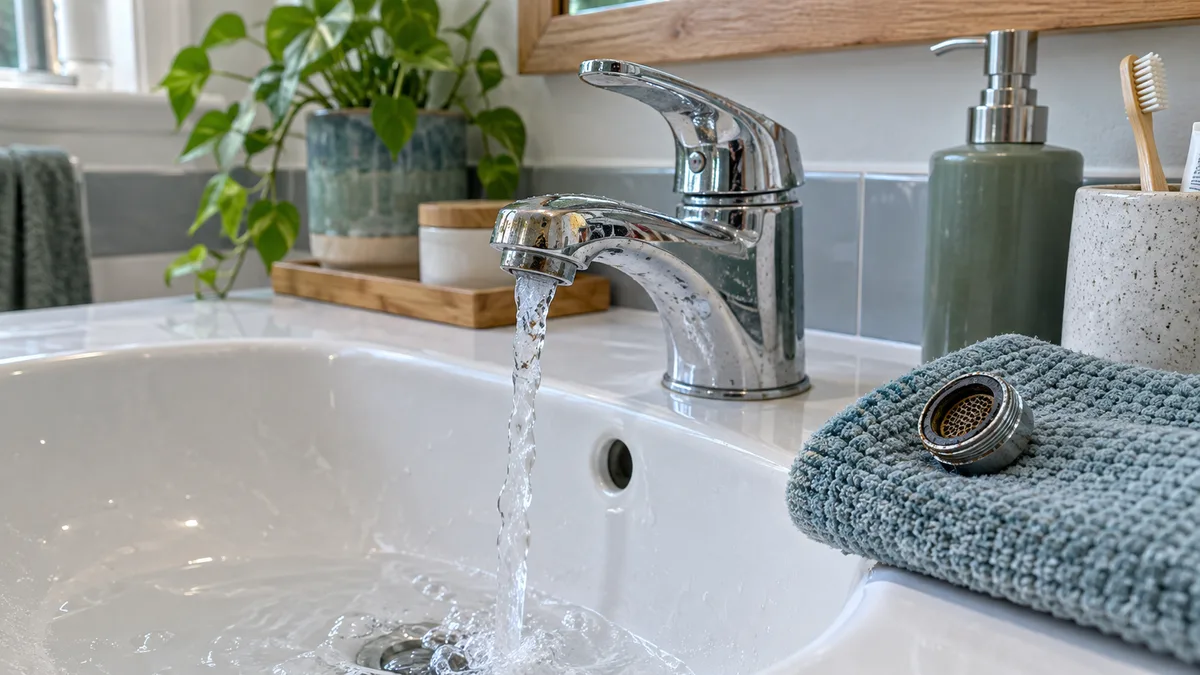
Check whether both hot and cold flow are weak at that fixture. An aerator or spray head can be a point of restriction, but the faucet design determines the correct cleaning method. Find the model instructions before unscrewing parts, especially on a recessed aerator that may need a specific key.
Protect the sink from dropped components and keep the parts in order. Clean or replace the user-serviceable aerator only as directed. Do not scratch a finish with pliers or remove flow-control parts to force a stronger stream. Reassemble correctly and check for leaks under normal use.
If the aerator is not the cause, report the symptom to a plumber or manufacturer support. A problem in the valve, hose or supply connection may need different work. The dripping faucet guide explains why an off-position leak and weak on-position flow should not be treated as one diagnosis.
Hot water is weaker than cold
Compare more than one hot-water fixture. If the problem appears at only one tap, the fixture or its local supply may be relevant. If several hot taps are affected, the hot-water system deserves assessment. Do not open water-heater valves or service panels to investigate.
Record whether the change involves temperature, flow or both. “Hot water takes longer to arrive” is not the same as “the hot stream is weaker once warm.” Our water heater basics guide helps you gather useful information without treating the appliance as a DIY adjustment project.
Several fixtures or simultaneous use
Several fixtures are affected
Check your water supplier’s current service information and ask whether nearby properties have a similar issue when appropriate. Water UK’s interruption guidance uses simple supply checks and neighbor comparison as part of its approach. Local utility instructions and responsibilities vary, so use your own provider’s advice.
If there is no known supply issue, contact a plumber about the home’s incoming supply, valves and any treatment equipment. Do not adjust a pressure-reducing valve by trial and error. Increasing a setting without measurement and system assessment can create a different plumbing problem.
Flow drops only during simultaneous use
Note which combination produces the change: shower plus washing machine, two taps together, or another regular pairing. That pattern may relate to available supply, restrictions or the system design. It does not by itself prove that a particular pipe must be replaced.
Use the observation to ask a plumber a focused question. Include whether this is a new behavior or has always happened. Avoid buying a booster pump based on a generic recommendation. Suitability, installation requirements and local rules need assessment before adding equipment to a water system.
A freeze or leak changes the priority
The change follows freezing weather or a leak
Treat a sudden trickle during a freeze as a reason for prompt investigation. Do not use a flame or improvised heater on piping. If the suspected area is concealed, inaccessible or already leaking, contact a plumber. Our winter preparation guide focuses on planning before these conditions develop.
If there are damp patches, unexplained water use or visible leakage, describe them alongside the flow change. Stay clear of water near electrical equipment. Use the main shutoff only if it is safely accessible and you know how to operate it, and arrange urgent help for an uncontrolled release.
Prepare a useful service call
Put your observations in one table
| Observation | Where to focus first | Who can help |
|---|---|---|
| One faucet, both temperatures | Fixture outlet and local components | Manufacturer or plumber |
| Several hot taps only | Hot-water supply and equipment | Qualified plumbing service |
| Whole home suddenly affected | Utility information and incoming supply | Water supplier, then plumber |
| Drop only with multiple fixtures | Demand pattern and system assessment | Plumber |
| Change during freeze or with leakage | Possible urgent plumbing issue | Plumber or emergency assistance |
This table organizes the call you need to make; it is not a pressure measurement. A technician may need gauges and further testing. Do not substitute how strong the stream feels on your hand for a measured assessment of the system.
What not to change during diagnosis
Avoid forcing old valves, changing regulator settings or dismantling treatment equipment. A partially closed valve may be relevant, but its intended position and condition must be known before adjustment. Photograph accessible labels and settings without altering them, and ask the service professional to explain their function.
Do not remove aerators permanently as a blanket solution. They are designed components of the fixture. If a correctly serviced outlet still performs poorly, continue the diagnosis rather than treating missing parts as normal operation. Keep any work within the manufacturer’s user-maintenance scope.
A practical comparison
Imagine that the bathroom faucet is weak but the adjacent bath and kitchen cold tap behave normally. That narrows the first investigation to the bathroom fixture and local supply. A supported aerator cleaning might be appropriate. It would not justify changing the whole-house regulator.
Now imagine all cold taps weaken immediately after a reported street-main repair. Utility guidance becomes the first useful source. The symptom may still need follow-up if it persists, but dismantling several faucets at once would make the sequence harder to understand. Add the event and result to your monthly inspection notes.
References for this guide
See Water UK supply-interruption advice and Thames Water’s household leak guidance as utility examples. Contact your local supplier for applicable service information and responsibilities.