
Recognize the seven warning signs
A burning smell without an obvious safe cause
If a burning odor seems to come from an outlet, switch, appliance or wiring area, stop using the affected equipment. Do not keep it running to see whether the smell fades. If you see smoke, hear active arcing or cannot safely approach, leave and call emergency services.
Do not unplug a hot, damaged or sparking connection. Isolation should only be attempted where it can be done safely without approaching the hazard and without opening equipment. When in doubt, stay clear and get help. Tell the responder where the smell was first noticed and whether anything was operating.
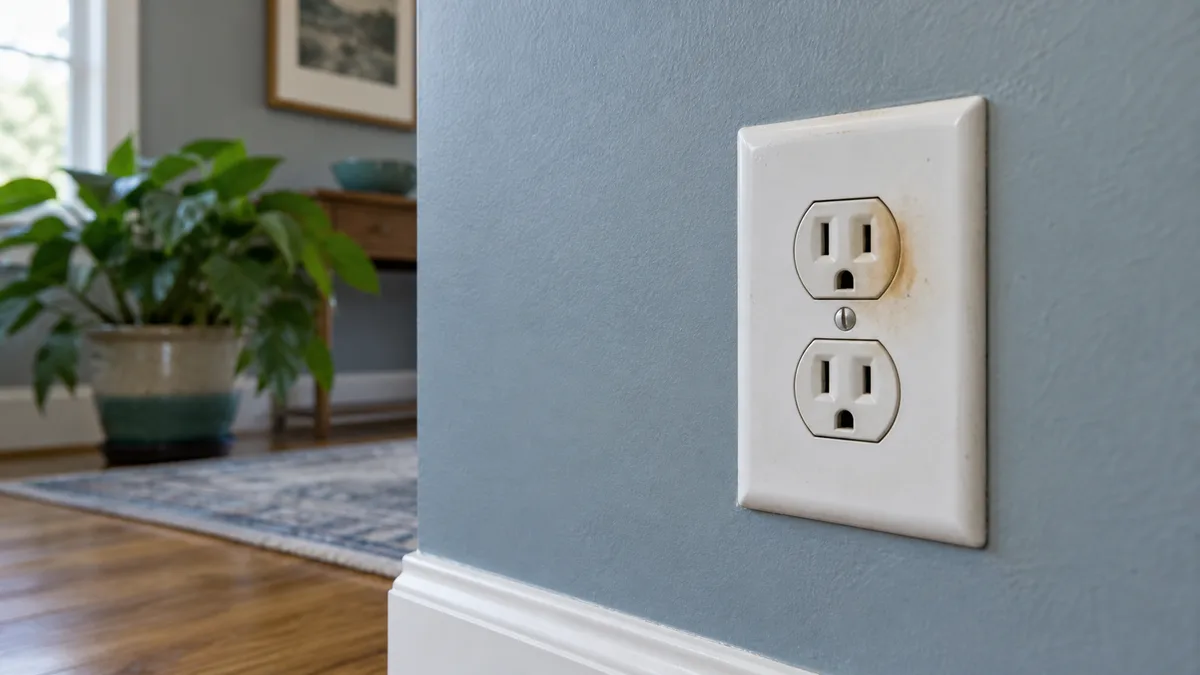
Discoloration, melting or deformation
A scorched-looking outlet plate or melted plug is not a cosmetic defect to cover with paint. Stop use and arrange assessment. Do not remove the plate to inspect behind it, and do not plug another appliance into the same location as a test.
The CPSC home wiring hazards guide discusses warning conditions around receptacles and wiring. Visible condition is a reason to act, but a normal-looking faceplate does not prove the wiring behind it is sound. Leave diagnosis to the appropriate professional.
A shock or tingling sensation
Stop using an appliance or fixture that gives a shock or tingling sensation. Do not touch it again to check whether the feeling was real, and keep others away. Water, damaged insulation and grounding problems can create dangerous situations that cannot be assessed by touch.
Seek medical help for an electrical injury as appropriate, and use emergency services for serious symptoms or an ongoing hazard. Describe the event to the electrician after people are safe. Do not treat a small sensation as harmless simply because the equipment continued operating.
Repeated breaker or protective-device trips
A breaker or protective device is responding to a condition that needs understanding. Repeated trips should not be handled by repeatedly resetting it. Stop using the affected equipment and have the circuit or appliance assessed. Do not replace a breaker with a larger rating to prevent trips.
Record what was running and whether the trip followed a particular action. That information can help a professional, but you should not deliberately recreate a hazardous combination. Follow manufacturer instructions for routine user tests of protective devices; those tests are different from troubleshooting repeated unexplained trips.
Buzzing, crackling or unstable operation
Unexpected crackling or buzzing from an outlet or switch deserves prompt attention. Do not put your ear or fingers close to the fitting to locate it more precisely. Stop use, keep clear and arrange qualified assistance. If accompanied by smoke or visible arcing, treat it as an emergency.
A noise inside an appliance can have several causes, but that uncertainty is not a reason to keep operating it. Record the location and normal activity at the time from a safe distance. Do not remove covers or reach through vents to investigate.
Damaged cords, plugs or loose connections
Stop using cords with exposed internal material, broken plugs or damaged strain relief. Tape is not a general repair for a damaged power cord. Replace or service the component according to the appliance instructions through an appropriate provider.
A plug that sits loosely in an outlet should not be wedged into place or held by furniture. Avoid running cords where doors pinch them or rugs hide damage. If furniture movement caused a problem, record the event and correct the routing only after the damaged equipment has been safely addressed.
Water near electrical equipment
Keep away from wet electrical fittings, appliances or panels. Do not stand in water to reach a switch or unplug a device. Arrange emergency or professional help appropriate to the situation. The fact that an appliance appears off does not establish that the area is electrically safe.
If a plumbing leak is involved, report both systems together. Our low water pressure and leak guide discusses plumbing observations, but it does not authorize entering a wet electrical area. Fixing the water source and assessing electrical equipment are separate tasks.
Once clear of the hazard: record what happened
What you can safely record
Once away from the hazard, write the location, time, smell or sound, equipment in use and whether a protective device operated. Take a photograph only from a safe position without touching or moving anything. Do not reenergize the circuit for a better picture.
For example, “living-room outlet behind the sofa smelled hot while a heater was operating” is useful. “The socket needs replacing” is an unverified diagnosis. A professional may need to assess the appliance, connection and circuit together. Keep the distinction between what you observed and what you suspect.
Before using the equipment again
Ordinary upkeep that does not involve wiring
Keep appliance manuals and service information accessible. Maintain clear access to electrical equipment as required and keep storage from concealing damaged cords. Use devices only within their listed purpose and instructions. Do not treat extension cords or plug multipliers as a substitute for suitable permanent electrical provision.
Include visual observations in your monthly home inspection, but do not touch outlets to test whether they are hot. During winter preparation, review safe heater use and make sure temporary heating arrangements do not create new electrical demands without proper assessment.
A response plan for the household
Make sure everyone knows that a warning sign means stopping use and reporting it. Children should tell an adult rather than investigate. Keep the electrician’s contact details and emergency numbers where they can be found without searching through a locked device.
After service, retain the description of the work and any operating instructions. If a symptom returns, report it promptly rather than assuming the recent repair guarantees safety. The preventive maintenance habits article explains how to keep a clear follow-up record.
References for this guide
Read the CPSC electrical safety resources and Guide to Home Wiring Hazards. Local qualification requirements vary; use an appropriately qualified professional for electrical work.