
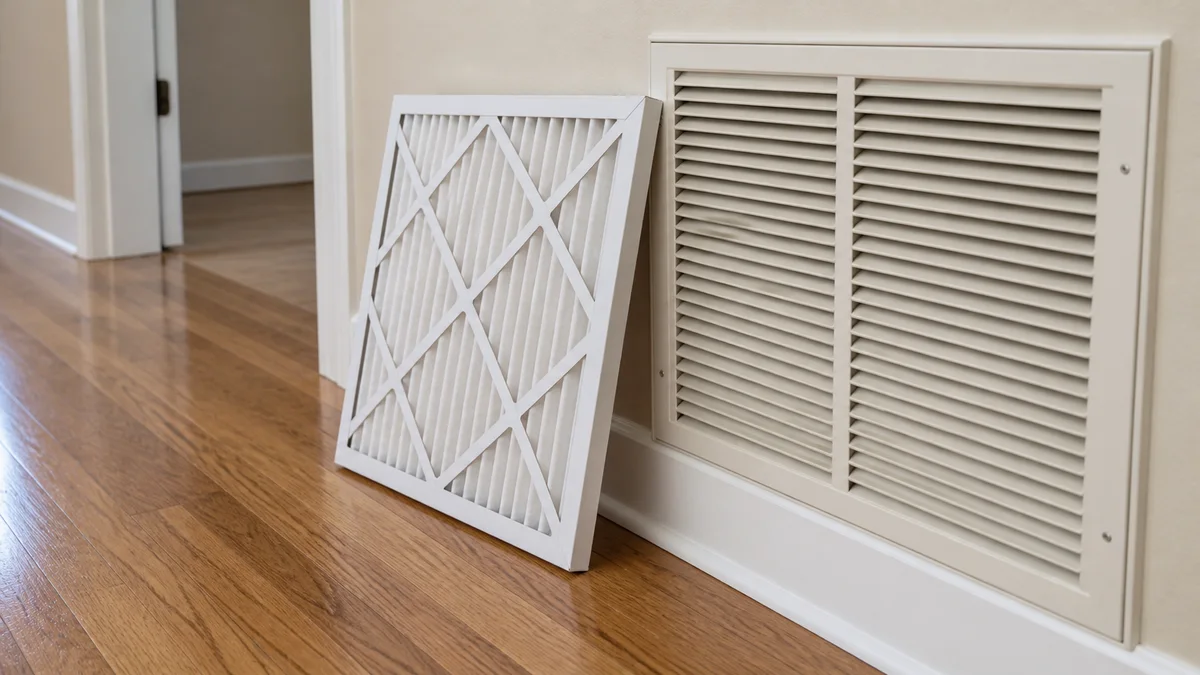
Choose the right filter
Where is the filter actually located?
Common locations include a return grille or a designated filter cabinet near the air handler, but your system may differ. Use the manual or ask the installer to identify every filter location. Do not assume a visible grille always contains one or that adding filters at several points improves the system.
Photograph the accessible filter arrangement before removal. Record which way the existing filter faces, but check it against the instructions because the previous installation may be wrong. If you find multiple filters in one path, ask the HVAC professional whether that arrangement is intended rather than copying it automatically.
Which dimensions and type should I buy?
Read the approved specification and the dimensions on the filter. Nominal sizes used for shopping can differ slightly from actual dimensions, and depth matters as much as width and height. A filter should fit the intended holder without bending, forcing or leaving a path around the frame.
Check whether the filter is disposable or washable. A paper-like pleated filter should not be washed unless its instructions explicitly describe it as reusable. For a washable filter, follow the cleaning and complete-drying procedure. Reinstalling an unsuitable wet filter is not an acceptable substitute for the correct part.
Does a higher MERV rating always help?
MERV describes filtration performance under a defined test; it does not tell you whether your system can accommodate a particular product. Filter construction, area and pressure drop matter too. Ask the equipment maker or an HVAC professional which range and type suit the installed system before increasing the rating.
Carrier’s filter guidance emphasizes matching selection and care to system and household factors. Avoid treating a single number as a universal upgrade. A filtration goal should be considered alongside airflow and the actual equipment design.
Plan the inspection and replacement
How often should I inspect or replace it?
Start with the equipment and filter manufacturers’ instructions. Operating time, dust, pets and filter design can change the appropriate schedule. Inspection and replacement are separate actions. Set a reminder to check condition at the specified interval, and record the replacement date when you actually change it.
Do not extend the interval simply because the visible side looks clean. Conversely, do not assume every deep media filter needs the same frequent replacement as a thin disposable one. If the correct schedule is unclear, ask the service company and put the answer in the equipment record.
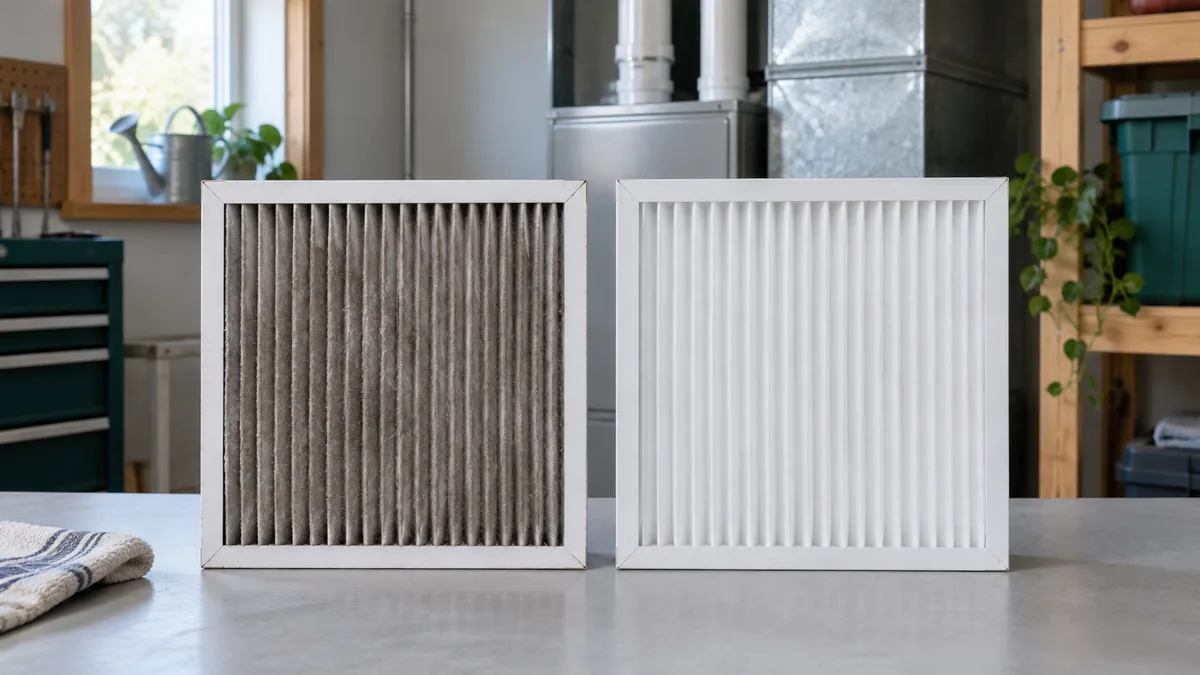
What should I do before opening the holder?
Follow the manual’s shutdown and access procedure so the system is not operating while you handle the filter. Keep fingers away from internal components and do not remove unrelated service panels. Prepare the correct replacement and a bag for a disposable used filter before starting.
Open only the user-serviceable holder as instructed. Avoid shaking accumulated dust into the room. If a cover will not open normally, the filter is jammed or the rack is damaged, stop. A forced filter frame or bent cover can create a poor fit even if the new filter dimensions are correct.
Which way should the airflow arrow point?
Use the airflow direction shown by the system instructions and the filter holder. The arrow indicates airflow through the filter; it is not simply an instruction to point toward the nearest wall or outward into the room. Confirm the direction before inserting the new filter.
Seat the filter without crushing it, close the holder securely and restore operation according to the manual. A label on your private maintenance record can note the correct orientation for next time. Do not tape across openings or improvise a holder modification to make an incorrect part fit.
Recognize a service problem
When is a filter change not enough?
Unusual noises, weak airflow, repeated shutdowns, water leakage or a filter that becomes wet need further investigation. Do not keep replacing filters as a way to avoid diagnosing a recurring symptom. Report when the change began and whether it followed service, construction work or a filter substitution.
If you suspect mold contamination in the HVAC system, stop and obtain professional guidance. Our bathroom mold decision guide explains why suspected system involvement changes cleanup decisions. Do not run a suspected contaminated system merely to see whether a new filter helps.
Keep a useful filter record
A replacement record that prevents repeat mistakes
Keep the system model, approved filter specification, size, orientation and service contact in one place. Add the date of each inspection and what you observed. Store spare filters dry, clean and protected from damage. A crushed spare is not improved by flattening it back into shape.
For example, a household might record that the filter holder uses one specified deep media cartridge, inspected according to the service instructions. That is a more useful note than “buy a large furnace filter.” The exact approved part removes uncertainty when someone else needs to purchase the replacement.
Compare the two common maintenance routes
| Filter type | Appropriate care | Avoid |
|---|---|---|
| Disposable | Replace with the approved size and type | Washing or vacuuming as a substitute for replacement |
| Explicitly washable | Follow the maker’s cleaning and drying process | Reinstalling damp or using harsh unapproved cleaners |
| Powered or specialized air cleaner | Use its specific service instructions | Treating electrical components like a passive filter |
The table does not determine your system’s filter type. Identify it before acting. If a label is missing and the construction is uncertain, ask rather than experimenting with water or solvents.
Fit filter care into seasonal planning
Include the user-accessible filter in your fall maintenance checklist and spring reset, while keeping the actual interval tied to the manual. Seasonal reminders are useful prompts, not permission to skip more frequent checks when required.
Use the monthly home inspection record for changes in noise, comfort or accessible moisture. Clear notes help distinguish a filter-care task from a broader equipment issue. Do not label normal filter replacement as a full professional HVAC service.
References for this guide
See Carrier’s filter replacement instructions and the Department of Energy home energy checklist. Your installed equipment manual determines the actual access, selection and maintenance procedure.