
Identify the finish and the mark
Start with the finish, not the marketing color
Find the model and its cleaning instructions. A surface sold as black stainless or fingerprint-resistant may have a coating that changes which products are suitable. Similar appearance does not establish identical care requirements. Keep the approved cleaner information with the appliance manual for later reference.
Look closely at the grain in good light. The grain is the directional pattern visible on many brushed surfaces, not a deep channel that needs aggressive scrubbing. Some parts of the same appliance may have a different texture or material. Handles, trim and control panels can require separate treatment.
A quick decision table
| What you notice | First response | Stop if |
|---|---|---|
| Fingerprints or greasy smears | Approved mild cleaning and dry finish | Coating becomes tacky or discolored |
| Spots after splashing | Model-approved water-spot method | Surface reacts or mark is unchanged |
| Fine visible scratch | Clean gently, then ask about repair | An abrasive method is the only proposed fix |
| Persistent dull or shiny patch | Review product history and finish | More cleaning changes the surrounding area |
The table is a way to classify observations, not a guarantee of a particular cause. A clean surface viewed in consistent light is easier to assess than one covered by several layers of polish. Stop when ordinary cleaning no longer explains the result.
Choose a mark-specific response
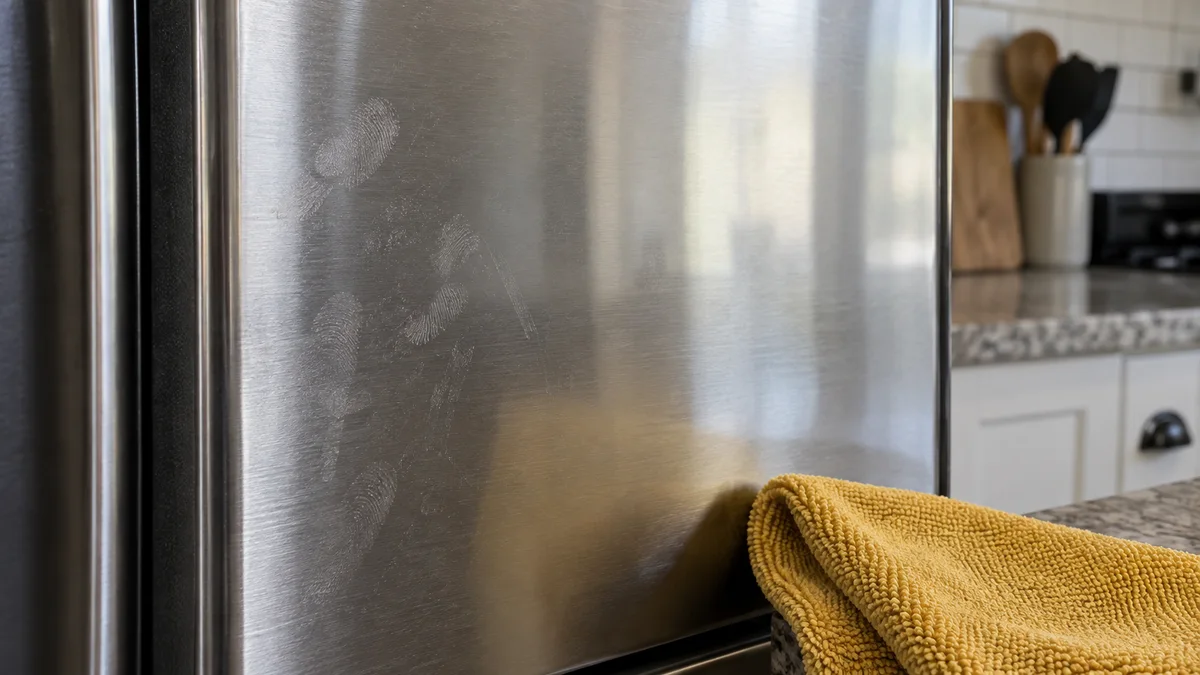
If the mark is a fingerprint or light grease
Use the mild compatible cleaning method in the manual, applying it with a soft cloth as directed. A small amount of approved cleaner is usually easier to control than spraying the entire door. Keep liquid away from seams, displays, vents and electrical areas.
Change to a clean section of cloth as residue lifts. Wiping repeatedly with the same greasy patch can spread a film that looks like streaking. Rinse or wipe away cleaner as instructed, then dry. The Whirlpool stainless-care guide emphasizes following the grain on suitable stainless surfaces.
If the mark appears after water dries
Check the manual for water-spot removal. Do not begin with an acidic household recipe on an unidentified coating. A compatible product may be appropriate, but its contact time and rinsing instructions matter. Test where instructed and let the area dry before treating the entire surface.
Preventing repeated wetting is part of the solution. Wipe ordinary splashes promptly with an approved method, and check whether a nearby faucet directs water toward the appliance. Our dripping faucet guide helps separate a fixture leak from routine splash marks.
If the mark remains shiny or dull at every angle
It may be a finish change rather than removable dirt. Stop using abrasive pads or stronger chemicals to chase it. Photograph the area in consistent light and note any product previously applied. Contact the manufacturer for a suitable assessment or repair recommendation.
Do not confuse temporary oiling with repair. A coating of an unapproved product may change how light reflects without correcting the underlying damage. It can also leave residue or affect later refinishing. The right next step depends on the actual surface, not on a quick improvement in a photograph.
If there is a scratch
A scratch is physical surface damage. Routine cleaning may remove dirt around it but cannot promise to erase it. Do not use sandpaper, steel wool or a powered polishing tool based on a generic online tutorial, especially on a coated appliance.
Ask the manufacturer whether a model-specific repair is available. Some visible panels may be replaceable, while other damage may be best left alone. Compare the practical options without assuming a cosmetic imperfection affects appliance operation. If the damage involves sharp edges or damaged electrical areas, arrange appropriate service.
Clean without carrying residue across the door
Use a repeatable three-cloth routine
If the manual permits wet cleaning, keep one cloth for the approved solution, another for the instructed rinse or residue removal, and a dry soft cloth for finishing. Label or store them so a gritty workshop cloth does not end up on the refrigerator. The exact number is a practical organization suggestion, not an appliance requirement.
Work in a manageable area and with the grain where appropriate. Avoid pressing hard over handles and edges. Finish one area, let it dry and compare before proceeding. This makes it easier to notice an incompatible product early rather than after the entire appliance has been treated.
What to keep away from the surface
Avoid steel wool, gritty cloths and unapproved scouring products. Do not use oven cleaner on an appliance front simply because the residue came from cooking. Keep chlorine-containing or acidic products away unless the manufacturer specifically approves the product and method for that finish.
Never mix cleaners or disinfectants. If you change methods, follow the product instructions for removing the previous product first. Our kitchen grease plan explains how to move between cabinet, backsplash and appliance surfaces without carrying one unsuitable method across the room.
Know when to stop
A practical example of stopping at the right point
Imagine a refrigerator door with fingerprints near the handle and one thin horizontal line below it. Compatible cleaning removes the fingerprints, but the line remains visible from several angles. Continuing to rub the line harder would treat a possible scratch as dirt. Stop, document it and ask about finish-specific repair.
In another case, the whole door looks streaky immediately after polishing. Let it dry and review how much product was used and whether residue was removed correctly. Do not add a second product to counteract the first. A controlled cleaning method provides a clearer answer than layering more finish treatments.
References for this guide
See Whirlpool’s finish-specific stainless-steel care guidance. For nearby furniture, use the separate wood finish care guide; do not transfer stainless-cleaning products to wood by convenience.