
Before the walk: make one record
Give each observation a place to live
Use one notebook or a simple document with four columns: location, observation, action and follow-up date. A useful entry might read “hall bathroom, new brown mark under supply hose, plumber contacted, check after visit.” Avoid assigning a cause until you have evidence. A mark under a hose could come from more than one connection.
Store equipment model numbers and manuals separately so the monthly list stays readable. When you photograph a mark, include enough surroundings to identify the location later. If you are monitoring a crack, place a ruler nearby without damaging the surface; the photo records appearance, not a diagnosis of structural stability.
The indoor route
The kitchen’s quiet corners
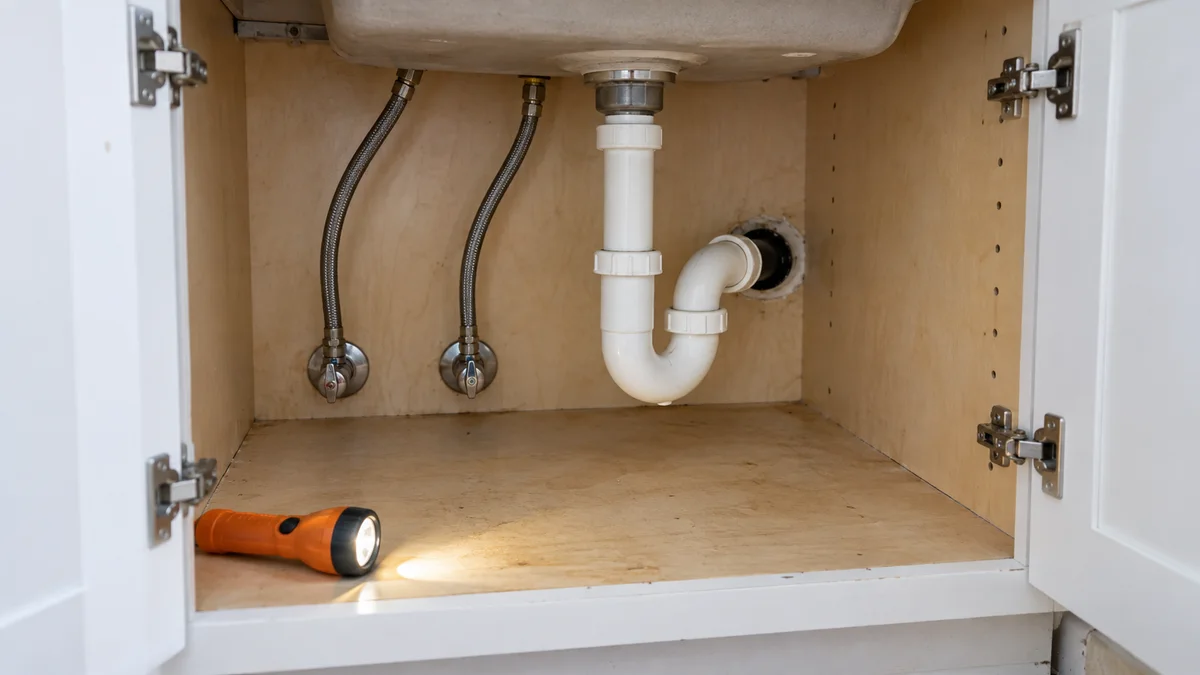
Empty only enough of the sink cabinet to see the base and accessible plumbing. Look for moisture, corrosion, swelling and objects pressing against hoses. Do not tighten fittings just because you are inspecting them. Disturbing a working connection can create a leak, and different fittings require different methods.
Look beside the dishwasher and refrigerator for fresh marks or water on the floor. Keep appliance vents and accessible clearances unobstructed according to their manuals. Check cabinet doors for new rubbing and loose handles. A door problem belongs on the repair list; our cabinet door guide starts with simple obstruction checks.
Bathrooms, with water in mind
Look around the toilet base, vanity and bath or shower edges. Note damaged sealant, recurring dark spots, loose-looking finishes and damp storage. A stain that returns after cleaning deserves a moisture investigation. Do not classify mold from its color or assume that a stronger cleaner will solve a leaking joint.
Listen after an ordinary toilet flush. Does the tank finish filling and stay quiet, or does water restart later? Write down the pattern rather than repeatedly adjusting internal parts. The running toilet guide explains how to distinguish a refill symptom from an obvious exterior leak.
If the room has an exhaust fan, observe whether it runs normally and whether moisture lingers unusually long after use. A fan sound alone does not prove effective airflow or correct outdoor termination. Record a change in performance and ask for service where needed; do not remove electrical covers during this walk-through.
Doors, windows and interior surfaces
Operate accessible doors and windows as you normally would. Watch for new resistance, a latch that no longer meets its strike, or a window that will not stay safely open. Do not force a stuck sash. Broken balances, damaged hardware and security problems need the appropriate repair.
Look at ceilings below wet rooms and around accessible window frames. Separate a long-standing mark from one that is new or changing. Photograph new bubbling paint or expanding discoloration and arrange an assessment. Painting before identifying moisture can hide the evidence without addressing the cause.
Equipment and the outdoor boundary
Laundry and home equipment
Look at the floor around the washing machine and accessible hoses without pulling the appliance out. Note a kink, bulge, drip or unusual rubbing. Heavy machines can damage hoses and flooring when moved incorrectly. Arrange access through a service professional when the connections cannot be inspected safely from where you stand.
Review your machine’s cleaning schedule and check for residue in user-accessible areas. Our washing machine care routine separates regular cleaning from service work. Avoid combining products or treating a persistent leak as a cleaning problem.
At heating and water-heating equipment, look from a safe distance for changes such as leakage, blocked access or damaged exterior covers. Do not open combustion chambers, electrical panels or pressure components. Record service dates and arrange overdue work using the equipment instructions, not a generic calendar copied from a different model.
A safe look outdoors
Walk accessible paths in daylight and good weather. Look for loose obstacles, drainage changes, vegetation touching equipment and visible damage around ground-level openings. Watch where rainwater exits downspouts. A clear route away from a wall can become blocked by garden changes or seasonal debris.
Roof edges, high gutters and overhead utilities are observation-only areas. Stay on the ground and arrange qualified access when something looks wrong. Do not enter crawl spaces or confined areas for the sake of completing a monthly list. The fall checklist provides a more focused seasonal follow-up.
After the walk: assign the next action
Finish by choosing actions, not accumulating worries
Review the list before putting it away. Mark emergency concerns for immediate action, active problems for prompt assessment and minor stable observations for a dated recheck. “Watch” should always include a reason and a follow-up point. It should not become an indefinite parking place for repeated leaks or growing damage.
Consider an illustrative example: you find a dry, old ring on a cabinet floor and a newly damp towel next to it. Photograph the old mark, remove the towel from contact with plumbing and identify whether there is active water. If dampness returns, arrange a repair. The history helps; it does not excuse ignoring a new symptom.
Avoid these routine-breaking habits
- Do not turn the inspection into unplanned disassembly. Keep repairs as separate tasks with the correct instructions and preparation.
- Do not check only visible living spaces. Accessible sink cabinets and laundry floors often provide useful early clues.
- Do not erase your history after a repair. Add the completion date and retain a comparison photo.
- Do not copy a fixed replacement schedule for every home. Use manufacturer information and actual condition.
References for this guide
For fixture-specific leak awareness, see EPA WaterSense: Fix a Leak Week. The route and recording method in this article are editorial suggestions for organizing household observations; a qualified professional must assess concealed or safety-critical conditions.