
Choose a safe route first
Choose a route before buying products
| Situation | Appropriate direction |
|---|---|
| Small limited patch, sound hard surface, known controllable moisture | Review official cleanup and protection guidance before proceeding |
| Large area, major leak or uncertain hidden extent | Arrange experienced professional assessment |
| Sewage or other contaminated water involved | Use a professional experienced with contaminated-water damage |
| Suspected contamination in HVAC | Do not run the affected system; obtain professional guidance |
| Health concerns or inability to use protection safely | Consult a health professional and arrange suitable help |
Do not use the table as a substitute for the full official guidance. It is a way to avoid starting with a cleaner when the first task should be identifying scope or getting assistance. A landlord or property manager should be informed promptly where the home is rented.
Size, moisture and material: three checks
First question: Is this a small, limited problem?
The EPA home mold cleanup guidance says that, in many cases, an area smaller than about ten square feet can be handled by a homeowner. That size is a screening consideration, not a guarantee. Extensive water damage, contaminated water, suspected HVAC involvement and health concerns change the decision.
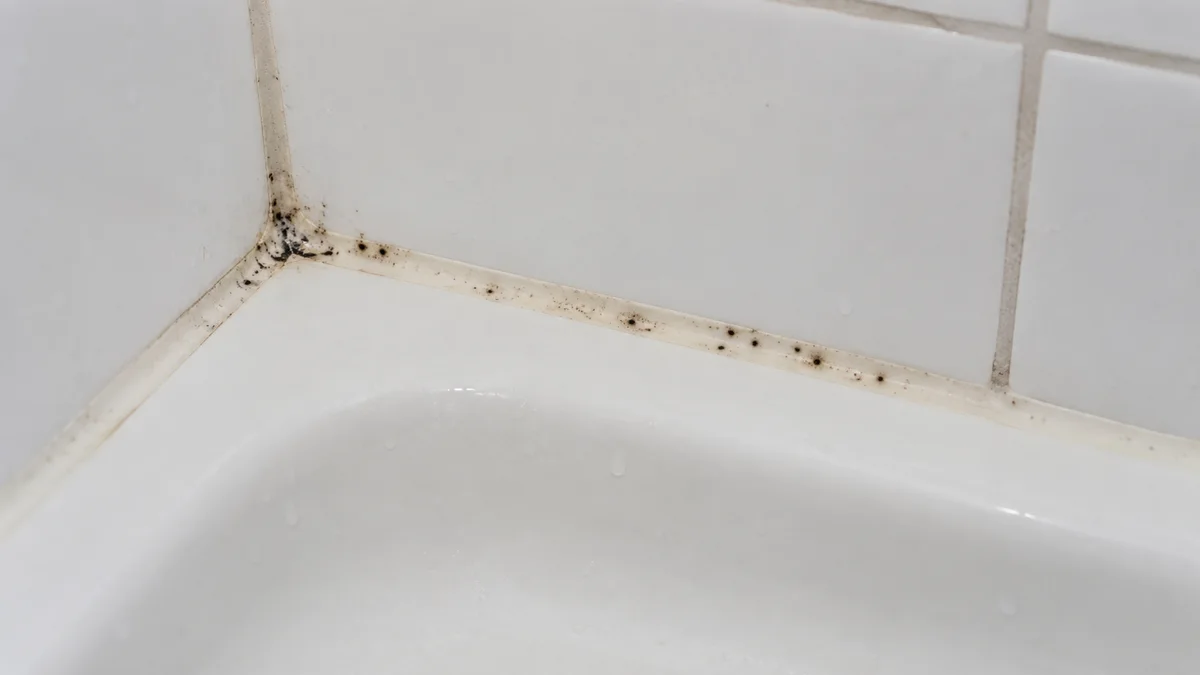
Estimate the visible area without disturbing it. Include the whole affected patch rather than counting only the darkest spots. If growth appears in several connected places or behind loose materials, do not assume the visible surface shows the full extent. Photograph the location and arrange assessment when the scope is unclear.
Second question: Where is the moisture coming from?
Look for practical clues: a leaking fixture, failed sealant, water escaping a shower enclosure or condensation that repeatedly leaves surfaces wet. Do not open walls or dismantle ventilation equipment to investigate. The aim is to identify what needs professional follow-up, not to expose a concealed problem yourself.
Record when the area becomes damp and whether the pattern follows bathing, rain or plumbing use. A patch below a window after storms suggests a different investigation from a shower corner that stays wet after every use. Cleaning without addressing the source leaves the conditions that allowed the problem to develop.
Third question: What material is affected?
Hard, nonporous surfaces may be candidates for an appropriate limited cleanup. Porous materials can be more difficult to clean fully and may need removal or replacement by a suitable professional. A painted surface does not automatically mean the material behind it is sound or unaffected.
Look for softness, swelling, peeling and damaged joints without poking or scraping. A cracked silicone joint is not repaired by wiping its surface. Our grout cleaning guide helps distinguish ordinary cleaning from failed tile joints, but it does not assess concealed waterproofing.
If a limited home cleanup is appropriate
If a limited cleanup is appropriate
Read the official cleanup instructions and the cleaner’s label before beginning. Use suitable protective equipment. EPA guidance for mold work includes an N95 respirator, gloves and appropriate eye protection; fit and correct use matter. If you cannot use the required protection safely, arrange help rather than omitting it.
For a suitable hard surface, EPA describes cleaning with detergent and water and drying completely. Follow material and product compatibility instructions. Avoid dry brushing, sanding or ordinary vacuuming of moldy material, which can disturb contamination. Keep people not involved in cleanup away from the work area.
Never combine cleaning chemicals. Bleach is not a default requirement for routine mold cleanup, and mixing it with other cleaners can produce dangerous fumes. The CDC bleach-safety guidance explains the mixing prohibition. Do not experiment with stronger combinations when a stain remains.
If you need professional assessment
Prepare useful information for a professional
Provide the approximate visible area, materials involved, date first noticed and any known water event. Include photographs taken without disturbing the patch. Explain what products have already been used and whether the problem returned. This is more helpful than a confident species label based on an online picture.
Ask about assessing and correcting the moisture source as well as cleanup. For an illustrative case, a repeatedly darkening shower joint and a damp ceiling below it should be described together. They may or may not share a cause, but separating them into unrelated cleaning complaints can obscure important context.
Afterward: dry conditions, not just a lighter stain
Judge success by the conditions, not the smell
After appropriate cleanup, the area should be dry and the moisture source addressed. A fragrance or a temporarily lighter stain does not show that the problem is resolved. Continue observing the location under normal use, and record recurrence rather than repeating the same treatment indefinitely.
Some staining can remain even after suitable cleaning, while hidden moisture can persist beneath a surface that looks clean. That is why color alone is an unreliable completion test. If the material stays damp, becomes soft or shows renewed growth, stop treating the issue as a routine housekeeping task.
Make the bathroom easier to keep dry
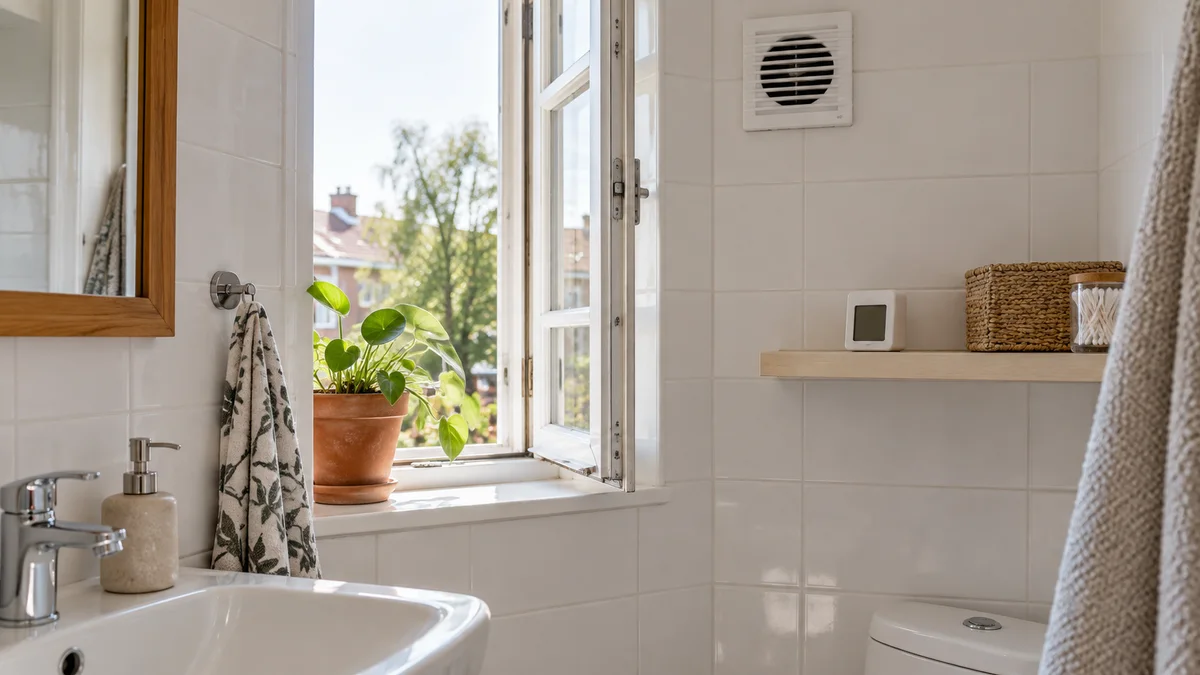
Use the installed ventilation according to its instructions and arrange service if performance changes. Do not assume a running motor proves air is being exhausted effectively. Keep accessible vents clear without opening electrical components. A small humidity monitor can help you observe trends, but its reading does not diagnose hidden leaks.
Remove excess surface water where the material instructions allow and avoid storing wet items tightly against corners. Check seals and plumbing for actual defects. Add those observations to your monthly inspection record and your spring maintenance reset.
References for this guide
Read EPA Mold Cleanup in Your Home and EPA protective-equipment guidance. The latter addresses remediation work more broadly; a homeowner should not infer that every professional procedure is suitable for DIY use.